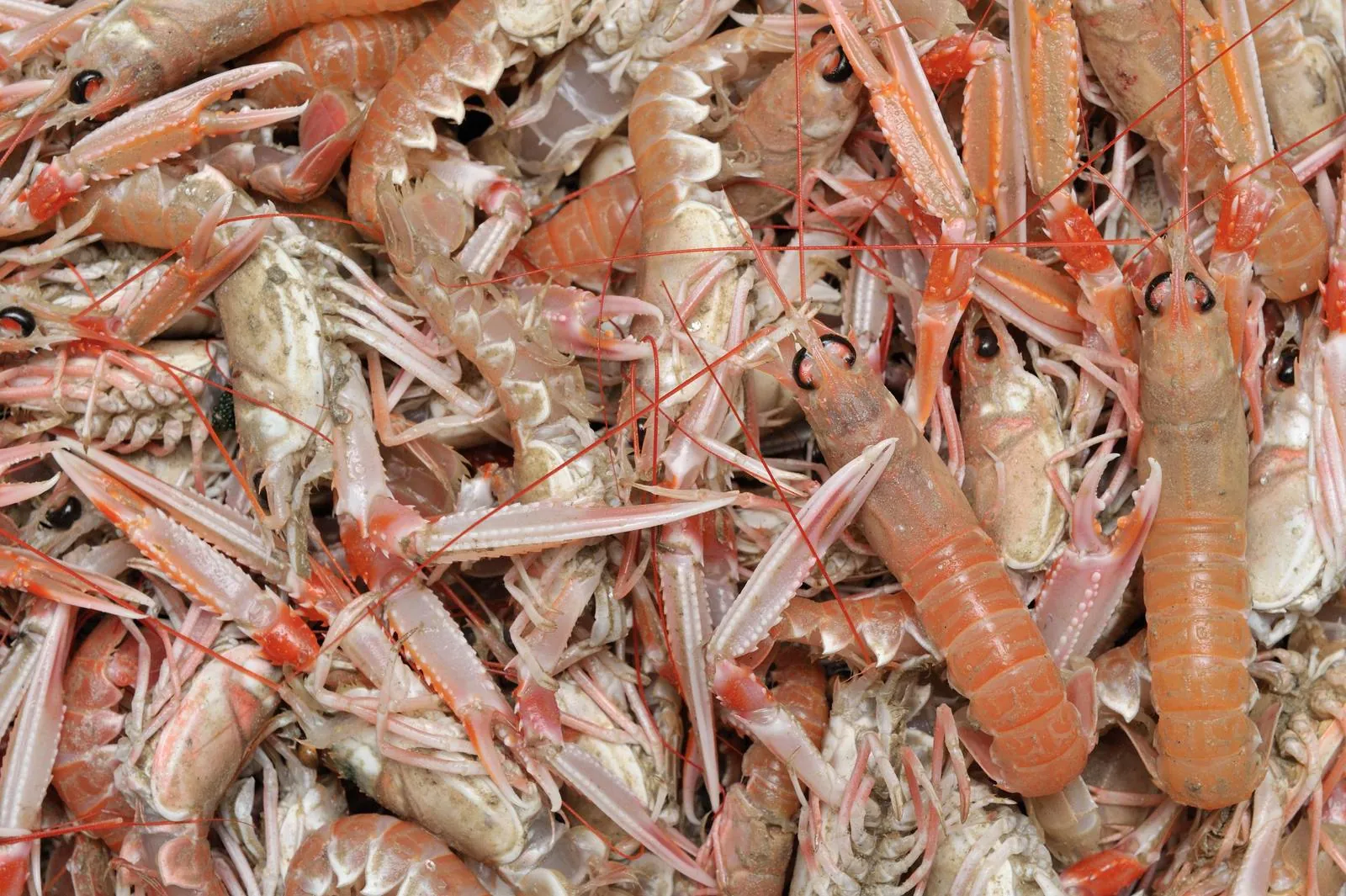
The Two Markets of the Langoustine
Creel boats land live langoustines worth three times the trawled price. The same species, two fisheries, and an argument that never ends.

Twelve months in the dehesa, from acorn fall to the curing cellar: the calendar behind the world's most patient ham.
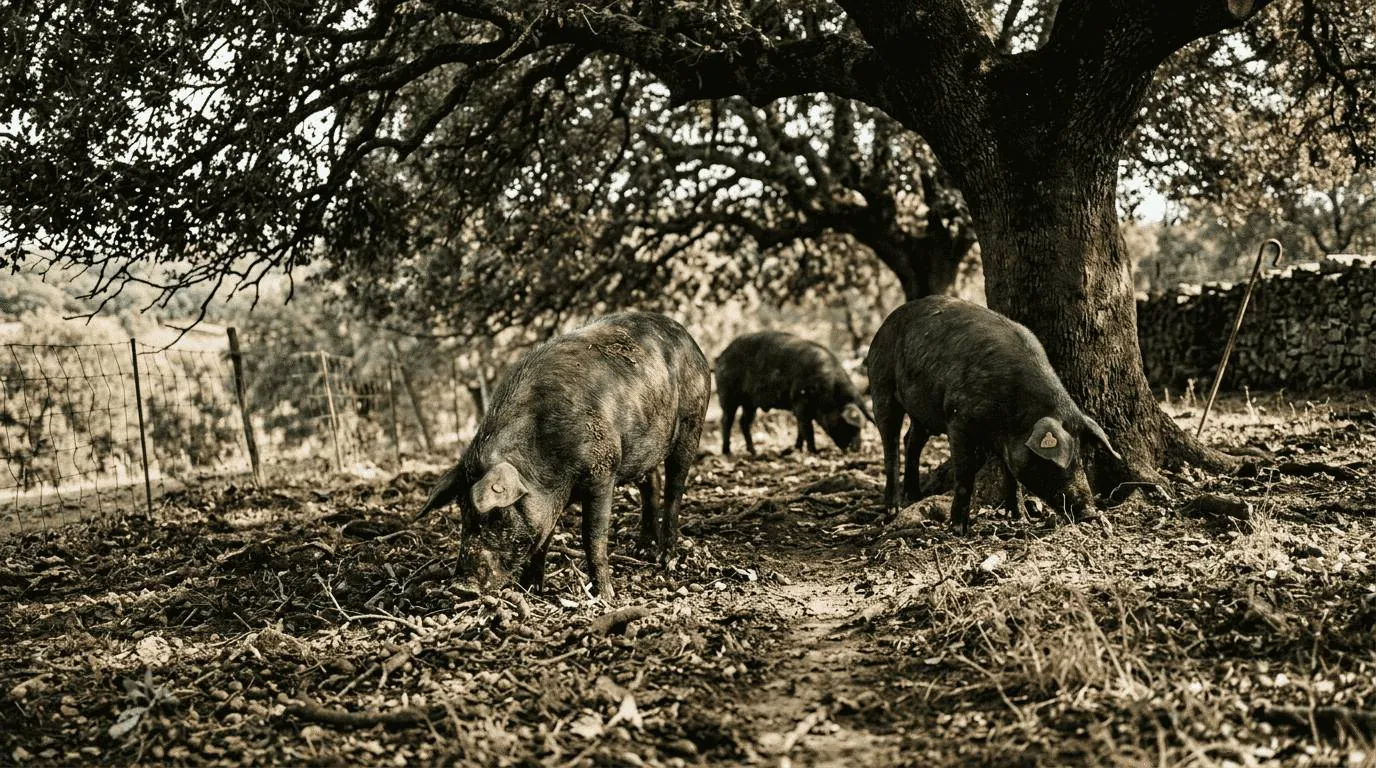
The finest ham in the world begins with a calendar, not a recipe. In the dehesa of Extremadura, the year turns on the oak, and the Iberian pig follows it. Everything else, the salt, the cellar, the four-year wait, is commentary.
Joselito is the company that has turned this calendar into a global reputation. Founded in Guijuelo in 1868 by Vicente Gomez, it works across roughly 170,000 hectares of dehesa in Extremadura. The scale is the first thing to understand: this is not a farm so much as a landscape.
Montanera is the acorn season, and it runs from October through March. The pigs roam the dehesa eating acorns and grass, and the numbers are startling. During montanera, Joselito's pigs reportedly consume 8 to 10 kilograms of acorns and 3 kilograms of fresh grass per day.
That daily intake is doing chemistry the farmer cannot fake. The acorn diet shapes the fat the way the vintage shapes the wine, and the pig's job for six months is to walk, eat, and convert oak mast into marbled muscle.
Joselito reportedly plants nearly 80,000 oak trees each year toward a target of 2.4 million over 30 years. The farm is, in part, a forestry project. A ham company that plants oaks on a thirty-year horizon is thinking in generations, because the dehesa only exists if someone keeps planting it.
Across two montaneras, the pigs reportedly grow from 23 kilograms to 180 or 190 kilograms. The average space per animal is 3 hectares, stretching from 2 hectares in plentiful years to 6 in lean ones. 2017 was a lean one, and the land dictated the terms.
From April through September, the pigs feed on herbs, legumes, mushrooms, and grass among the gall, holm, and cork oaks. This is the quiet half of the year. The animals range, the oaks leaf out, and the farmer waits for the acorns to fall.
The green months are the part of the story nobody photographs. No fattening, no drama, just free-ranging animals on pasture that has been managed for centuries. The dehesa is a human-made ecosystem, and the summer is when it rests.
Slaughter season runs January through March. The meat is dry cured rather than brined or smoked. The legs are salted, profiled, and dried for at least two years, then checked by an el calador, the master who judges each ham by needle and nose.
The calador is the quality control the industry cannot automate. A bone needle goes in, the master smells it, and years of cellar work are accepted or rejected in seconds. No instrument reads a ham the way a trained nose does.
Aging takes place in Guijuelo at 60 to 80 percent humidity and 14 to 18 degrees Celsius. The average aging is 3 to 4 years, never less than 36 months. The named producing areas are Guijuelo, Jabugo, Los Pedroches, and Extremadura, each with its own regulations and its own defenders.
The regulations are the point of the named areas. Guijuelo, Jabugo, Los Pedroches, and Extremadura each define what may carry the name, and the producers defend those lines fiercely. In a product this slow, the name is the guarantee.
A year with a heritage pig farmer is mostly waiting. Waiting for acorns, waiting for weight, waiting for the cellar to finish what the oak started. The ham cannot be hurried, which is exactly why it is worth writing about.
Filed from the Provenance desk.
Creel boats land live langoustines worth three times the trawled price. The same species, two fisheries, and an argument that never ends.

What happens when sourcing claims get checked: the Tampa exposé that tested the menus, and the certifications meant to keep them honest.
The artisan loaf had to be milled by someone. Three millers, in England, South Carolina, and France, who rebuilt the supply chain.
The week's essential tables, in your inbox every Sunday.
Free. Unsubscribe anytime. Read our privacy policy.